Video production is a major investment for any business, but choosing between AI-powered video editors and traditional editing can make a dramatic difference in your budget, timeline, and content quality. If you’re wondering which saves more—an ai video editor or traditional editing—here’s the direct answer: AI video editors consistently cut both time and costs compared to manual workflows, often without sacrificing quality for standard business content.
With automation, quick turnaround, and scalable solutions, ai video editor platforms are reshaping how brands, agencies, and creators approach content creation. Still, there are scenarios where traditional editing remains essential. Below, you’ll find clear comparisons, practical insights, and a checklist to help your business make the smartest choice for video editing.
AI Video Editor: Key Features, Use Cases, and Content Formats
An AI video editor leverages machine learning to automate video creation, editing, and localization—eliminating the need for traditional shoots. AI video generators and AI video makers produce video assets from text prompts, storyboards, or scripts, enabling rapid content delivery at scale. Core features include automated scene composition, generative video backgrounds, AI voiceover, customizable templates, and white-label production options for agencies.
Common business use cases:
- Marketing videos: Generate branded assets for campaigns, product launches, or promotions with minimal input.
- Explainer and tutorial content: Convert scripts into polished, animated explainers or educational videos using AI videos creator tools.
- Social media and vertical content: Instantly adapt videos for platforms like Instagram, TikTok, or LinkedIn with built-in format presets.
- Localized versions: Create language, accent, or region-specific versions using automated translation, voice, and visual adaptation.
- White-label production: Agencies can deliver AI-powered video solutions under their own brand, with full commercial rights.
AI video generator vs traditional tools
Unlike manual editing, a video AI generator eliminates the need for filming, casting, or location scouting. Content is synthesized based on instructions, saving both time and budget. AI videos editor platforms support rapid iteration and two-round revision cycles, fitting agency workflows.
Content formats and ownership
AI video editors export in all major aspect ratios—9:16, 1:1, 16:9—and high-resolution stills. Upon project completion and payment, clients receive full commercial rights, enabling unrestricted global use of generated content. This model ensures clear ownership compared to some traditional or stock-based workflows.
Traditional Video Editing: Process, Resources, and Typical Projects
To understand the full picture, let’s look at how traditional video editing works.
Traditional video editing follows a structured, multi-stage workflow:
- Briefing and pre-production: Define objectives, develop concept, create storyboard, scout locations, assemble crew.
- Production: Shoot footage on-site with cameras, lighting, and sound equipment; manage logistics for talent, locations, and props.
- Post-production: Import, organize, and edit raw footage; add animation, VFX, music, and sound design; perform color correction and grading.
- Review and revisions: Iterate versions based on client or agency feedback, often requiring several rounds of edits.
- Final delivery: Export in required formats for distribution.
Resource checklist for traditional editing
You need camera and lighting gear, sound equipment, editing software, physical locations, set designers, and a core team—director, cinematographer, editor, sound designer, animators. Crew sizes range from 5 to 30+, depending on project scope.
Typical projects include TV commercials, branded content, corporate films, and high-end digital ads—often with six-figure budgets.
Rights management in traditional production
Commercial rights and legal clearances involve talent releases, location permits, music licensing, and IP verification. Rights are transferred upon full payment, with all documentation secured before public release.
Production Time Comparison: AI vs Traditional Editing in Real Business Cases
Now, let’s compare production timelines for both approaches.
AI video editors consistently reduce production time for standard business videos. A typical 60-second brand video using a video AI generator, including concept, storyboard, and two feedback loops, takes 3–5 days from brief to delivery. Traditional editing—requiring location scouting, filming, and manual post-production—averages 2–3 weeks for the same deliverable.
Case study: AI video editor
A SaaS company required a global product launch video. Animagine Solutions used an AI video editor: script approval (Day 1), storyboard (Day 2), AI-driven video generation and first draft (Day 3), feedback round (Day 4), and revision plus delivery (Day 5). There was no downtime for logistics or location setup. Each feedback loop took less than 24 hours for implementation.
Case study: traditional editing
A similar project for a consumer brand used a traditional workflow: script and storyboard (Week 1), location and talent booking (Week 2), shooting (Week 3, 2 days), offline editing and feedback (Week 4), final revisions and delivery (end of Week 4). Each feedback loop averaged 2–3 days due to resource scheduling.
| Workflow Stage | AI Video Editor (Days) | Traditional Editing (Days) | Key Differences |
|---|---|---|---|
| Concept & Script | 1 | 3 | Traditional: more stakeholder alignment |
| Storyboard | 1 | 2 | Both require approval cycles |
| Production | 1 | 5–7 | AI: instant generation; Traditional: shoot |
| Feedback & Revision | 1–2 | 4–6 | AI: rapid iteration |
| Total Duration | 3–5 | 14–21 | AI: 3–4x faster overall |
AI surpasses traditional production in speed for most business cases, especially with frequent revisions. However, highly specialized or live-action requirements may still favor traditional workflows for select tasks.
Cost and ROI Analysis: Transparent Budgeting for AI and Traditional Editing
After considering time, let’s examine costs and return on investment.
Below is a direct cost comparison between an ai video editor workflow and traditional editing, based on recent Animagine Solutions projects. Key cost components: concept development, production, editing, revisions, and delivery. For agencies, white-label production and scalability significantly affect ROI and long-term savings.
| Item | AI Video Editor (Generative) | Traditional Editing | Notes |
|---|---|---|---|
| Concept & Storyboard | Included | $500–$1,200 | AI packages often bundle pre-production |
| Production (per video) | $800–$2,500 | $4,000–$12,000 | No location/camera costs with AI |
| Editing & Post | Included | $1,000–$3,000 | AI delivers edit-ready assets |
| Revisions (2 rounds) | Included | $300–$800 | Standard in AI packages |
| Delivery (multi-format) | Included | $200–$800 | AI delivers all required formats |
| Total | $800–$2,500 | $6,000–$17,800 | AI 70–85% more efficient by budget |
ROI calculator: AI vs traditional editing
ROI = (Value of Output – Total Cost) / Total Cost. For business video projects, calculate value based on expected leads, brand exposure, or content velocity. Agencies using white-label production gain extra margin and the ability to scale output without increasing headcount. For example, Animagine Solutions clients report tripling project volume at the same budget compared to traditional workflows—accelerating content delivery and maximizing ROI.
Quality of Content: Criteria, Examples, and Limitations of AI vs Traditional Editing
Quality is a critical factor in choosing your editing approach.
AI video editor: strengths and weaknesses
Quality assessment for any ai video editor comes down to four key criteria: visual fidelity, storytelling coherence, brand alignment, and adaptability. AI-generated videos excel in producing visually consistent content at scale—think multilingual product explainers or localized ads—with pixel-perfect framing and seamless logo integration. For example, Animagine Solutions created a global campaign for a tech brand: 12 product videos localized in 6 languages, delivered in five aspect ratios, all with hyper-realistic virtual Paris backdrops. While the ai videos creator ensured speed and visual uniformity, limitations appeared in nuanced emotional cues and scene dynamics—areas still challenging for AI. Complex narratives and subtle brand messaging often require manual intervention.
Traditional editing: when quality matters most
Traditional editing remains superior when projects demand bespoke storytelling, intricate transitions, or complex effects—such as cinematic commercials or art-driven content. Human editors better interpret ambiguous briefs, improvise with raw footage, and craft original motion graphics. For instance, a luxury fashion client required a video series with surreal transitions between dream-like scenes and live-motion overlays; manual editing delivered creative precision AI couldn’t match. Hybrid approaches—where AI handles repetitive tasks, and experts fine-tune key scenes—help overcome current limitations, combining speed with top-tier quality.
Checklist: Choosing the Right Video Editing Approach for Your Business
To make the best decision, use this checklist:
- Define your project type and complexity: Choose an ai video editor for explainer videos, ads, or quick social media formats; opt for traditional editing for high-end storytelling or niche visuals.
- Set your budget range: Select AI if you need to maximize output per dollar; use traditional for projects where premium customization justifies higher costs.
- Confirm timeline: Prefer AI for tight deadlines (under 7 days); rely on traditional for flexible, milestone-driven schedules.
- List all required formats: Ensure your solution supports 9:16, 1:1, 16:9, and high-res stills.
- Check commercial rights and content ownership: Insist on clear transfer terms, especially for white-label or agency projects.
- Assess legal compliance: Verify that all generated assets are cleared for commercial business video editing use.
Consult with Animagine Solutions: Tailored Video Editing for Business Results
If you need guidance, Animagine Solutions ensures your video project aligns with business goals—whether leveraging an AI video editor or combining AI with creative human direction. Our team specializes in business video editing for brands and agencies, managing everything from creative brief to delivery in any required format (9:16, 16:9, high-res stills). All commercial rights are transferred after payment, and two rounds of revisions are always included. White-label production and transparent pricing streamline collaboration.
How to start with Animagine Solutions
Submit your brief or book a consultation via our website. You’ll receive a detailed proposal outlining workflow, deliverables, and timelines within 24 hours. Animagine Solutions adapts to your needs, whether you require AI-powered content at scale or traditional edits for complex visual narratives.
Часті запитання
Can an AI video editor fully replace traditional editing?
An AI video editor cannot fully replace traditional editing in all scenarios. While AI excels at automating standard business videos and rapid content creation, traditional editing is still preferred for complex, high-end productions, live-action shoots, or projects requiring bespoke creative direction and hands-on craftsmanship.
What types of videos are best suited for AI video editors?
AI video editors are best suited for explainer videos, marketing assets, social media content, and simple branded presentations. These formats benefit from automation, rapid iteration, and template-driven workflows, making AI ideal for projects with tight deadlines, frequent updates, or multi-language requirements.
Are there limitations in the quality of AI-generated videos?
Yes, AI-generated videos may have limitations in visual realism, nuanced storytelling, and custom animation. While AI tools produce polished results for standard formats, they may struggle with highly creative concepts, unique visual effects, or detailed live-action integration that traditional editing teams can achieve.
What is white-label video production and how does it work?
White-label video production allows agencies to deliver AI-generated videos under their own brand, without revealing the underlying provider. The agency manages client relationships and branding, while the AI platform handles video creation, enabling scalable, cost-effective content delivery with full commercial rights. Детальніше про це — у матеріалі make ai videos. Детальніше про це — у матеріалі ai video generator.
What rights transfer guarantees does Animagine Solutions provide for video projects?
Animagine Solutions guarantees full commercial rights transfer to clients upon project completion and payment. This ensures clients have unrestricted global usage of the AI-generated video content, with clear legal ownership and no residual claims from the production provider.
Головне за хвилину
- AI video editors dramatically reduce production time, delivering business-ready videos in 3–5 days versus 2–3 weeks for traditional editing—ideal for rapid campaigns and frequent revisions.
- Resource needs are minimal with AI tools: No filming, crews, or equipment; simply input your script and objectives to generate content, making the process highly accessible and scalable.
- Ownership and rights are straightforward: AI platforms grant full commercial rights upon project completion, streamlining distribution and usage compared to the complex legalities of traditional production.
Ultimately, choosing between AI and traditional video editing comes down to your project’s complexity, timeline, and budget. If speed and efficiency are your priorities, AI video editors are a game-changer. Ready to accelerate your next project? Start a project today.
More from the blog

Advertising photography in 2026: How AI changes campaign visuals
AI is revolutionizing advertising photography in 2026, making visuals more creative and affordable. Discover the latest trends and innovations!
Make AI videos: 5 Proven Workflows for Agencies & Creators
Discover five proven workflows to make AI videos efficiently. Perfect for agencies and creators aiming for top-quality results with less hassle.
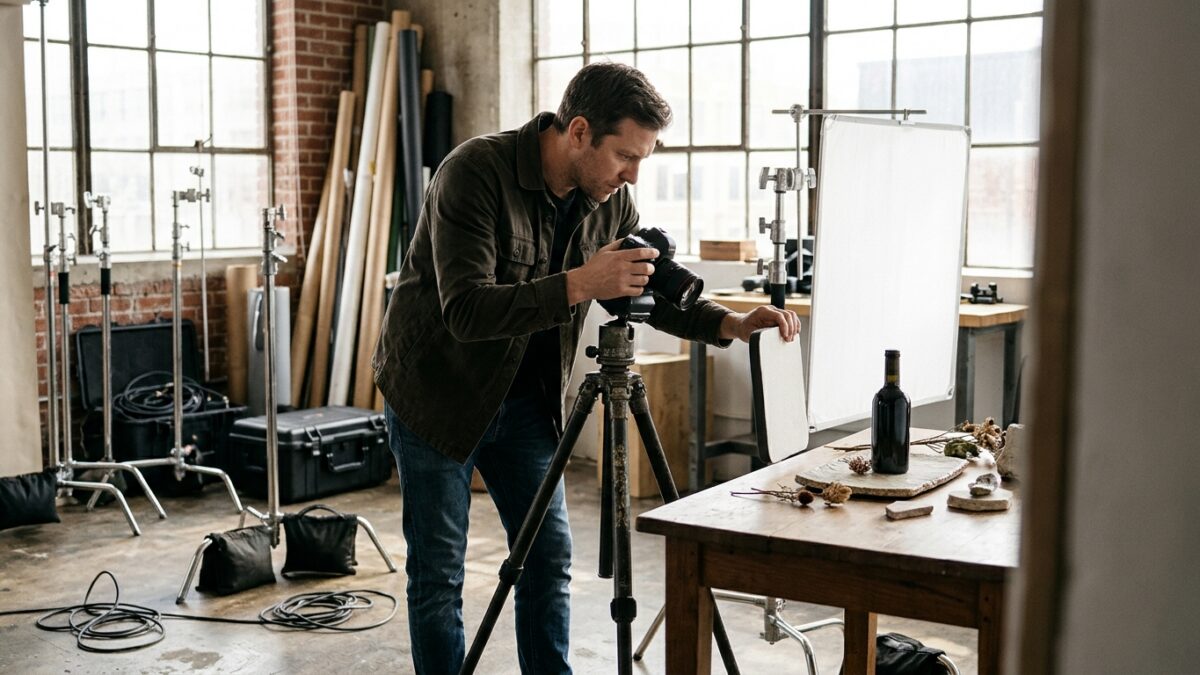
Product photographer or AI product photography: Which works for ecommerce?
Explore whether a product photographer or AI product photography is best for ecommerce. Compare benefits, costs, and creative options for online stores.