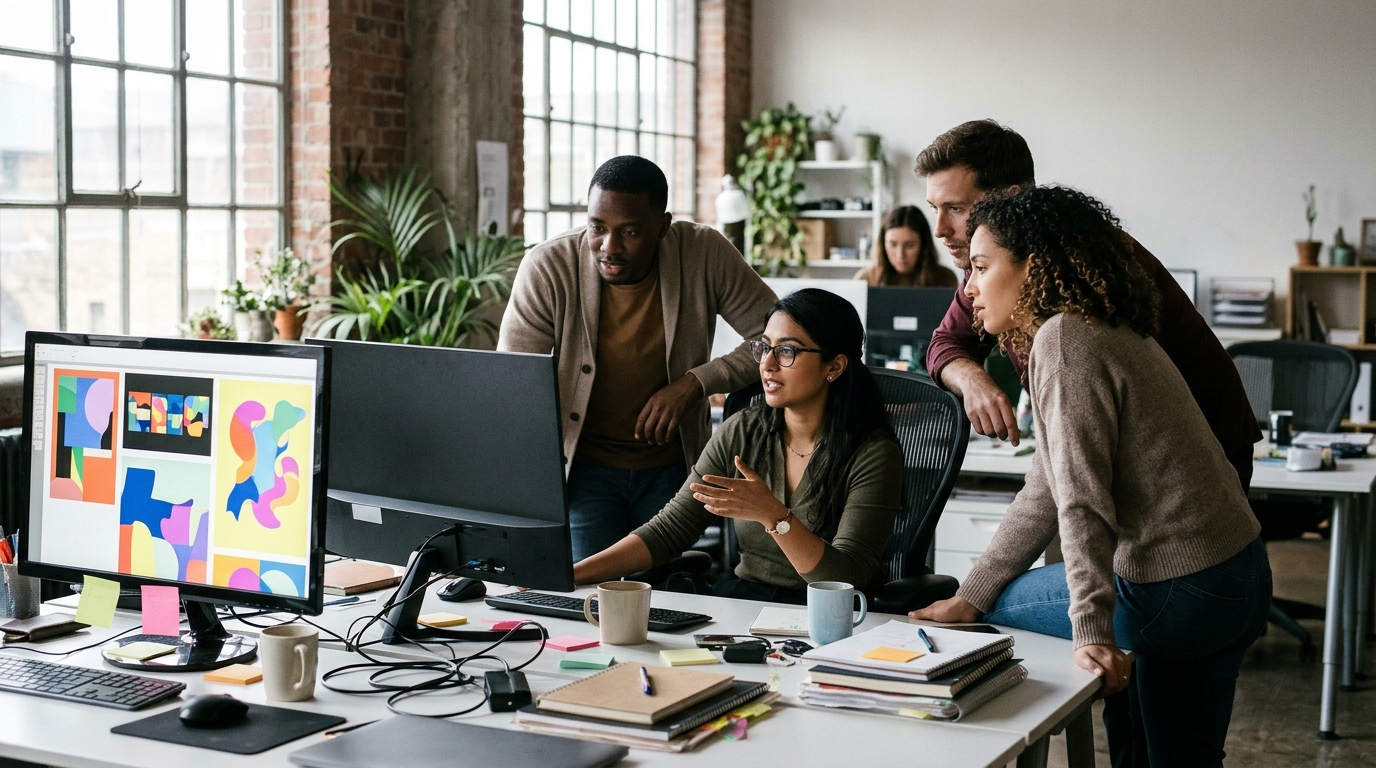
Advertising photography in 2026 is being transformed by artificial intelligence, making campaign visuals more innovative, customizable, and efficient than ever before. AI-generated images now allow brands and agencies to create original, hyper-realistic photoshoots without traditional studios, models, or locations. This shift means advertising photography delivers unique, tailored content at a fraction of the usual time and cost.
AI technologies are unlocking new creative possibilities for businesses and creatives, enabling rapid testing of visual ideas and instant adaptation to market trends. With AI at the core, advertising photography is no longer limited by physical resources or logistics. Let’s explore how these advances are reshaping the industry and what they mean for your next campaign.
Defining Advertising Photography in 2026: What’s Changed?
By 2026, the boundaries of advertising photography have shifted dramatically. Traditional shoots with physical sets, models, and locations are now the exception. Brands and agencies increasingly rely on AI-generated or hybrid visuals, merging elements of commercial, product, and model photography—without the logistical challenges.
AI-driven tools produce tailored campaign images in any setting, from hyper-realistic kitchens to fantastical skylines, all within hours. The demand for instant, scalable, and customized content has pushed the industry toward on-demand production. Campaigns now routinely deploy hundreds of unique, high-res visuals—each fine-tuned for audience, platform, and brand narrative—delivered in multiple formats with minimal turnaround.
Key Trends: AI and Generative Technologies Redefining Campaigns
Building on these changes, brands now use generative technologies to achieve set design and backgrounds that were once unthinkable within traditional production limits. AI product photography enables rapid creation of photorealistic models and environments, reducing turnaround time from weeks to days. Personalization is accelerating—AI generates thousands of unique visuals tailored for specific audience segments, increasing engagement and relevance.
How brands leverage generative AI
- Custom set design: AI recreates any location, era, or fantasy setting with pixel-level precision—no travel, no physical builds.
- Photorealistic virtual models: Brands generate diverse, hyper-realistic models matched to their demographics, eliminating casting constraints.
- Dynamic personalization: Visuals adapt in real time, delivering hyper-targeted messaging for micro-segments.
- Consistent brand visual identity: AI tools learn and apply brand guidelines across every asset, ensuring cohesion at scale.
- Automated storyboard creation: Campaign storylines and shot lists are rapidly prototyped and iterated using generative tools.
- Seamless format delivery: Instant conversion to required aspect ratios and resolutions, ready for every platform and market.
AI Product Photography with Models: How It Works and Real Examples
The integration of AI product photography with models blends advanced generative tools and creative direction to deliver hyper-realistic visuals. Instead of physical model photography, AI generates lifelike faces, diverse body types, and any setting—luxury penthouses, city streets, or imagined worlds—at scale. Products are digitally integrated, ensuring seamless interaction with virtual models and environments.
Real-world campaigns now launch seasonal collections with AI-generated models reflecting different ages, ethnicities, and styles. Companies routinely showcase products in multiple global locations, all without travel or set construction.
- Hyper-realistic model creation: AI crafts models tailored to brand personas, from editorial to lifestyle looks, supporting inclusivity and style requirements.
- Dynamic environment selection: Virtually stage products in any context—beach sunrise, Paris rooftops, or futuristic interiors—without location scouting.
- Product integration: Items are rendered to interact with fabrics, hands, or accessories, achieving photorealistic detail.
- Rapid iteration: Change model poses, demographics, or backgrounds in minutes.
- Cost efficiency: Eliminate expenses for travel, talent, and set design; budget instead supports creative experimentation.
- Consistent quality: AI ensures every asset matches campaign guidelines, regardless of style or volume.
Example: Brand X’s custom set design without on-location shooting
Brand X replaced traditional product photography by commissioning a campaign set in an imagined Tokyo rooftop garden at sunset. AI-generated models engaged naturally with the products, achieving a cohesive, premium aesthetic—delivered fully remotely and ready for global omni-channel release.
Traditional vs. AI-Generated Advertising Photography: Time, Cost, Flexibility
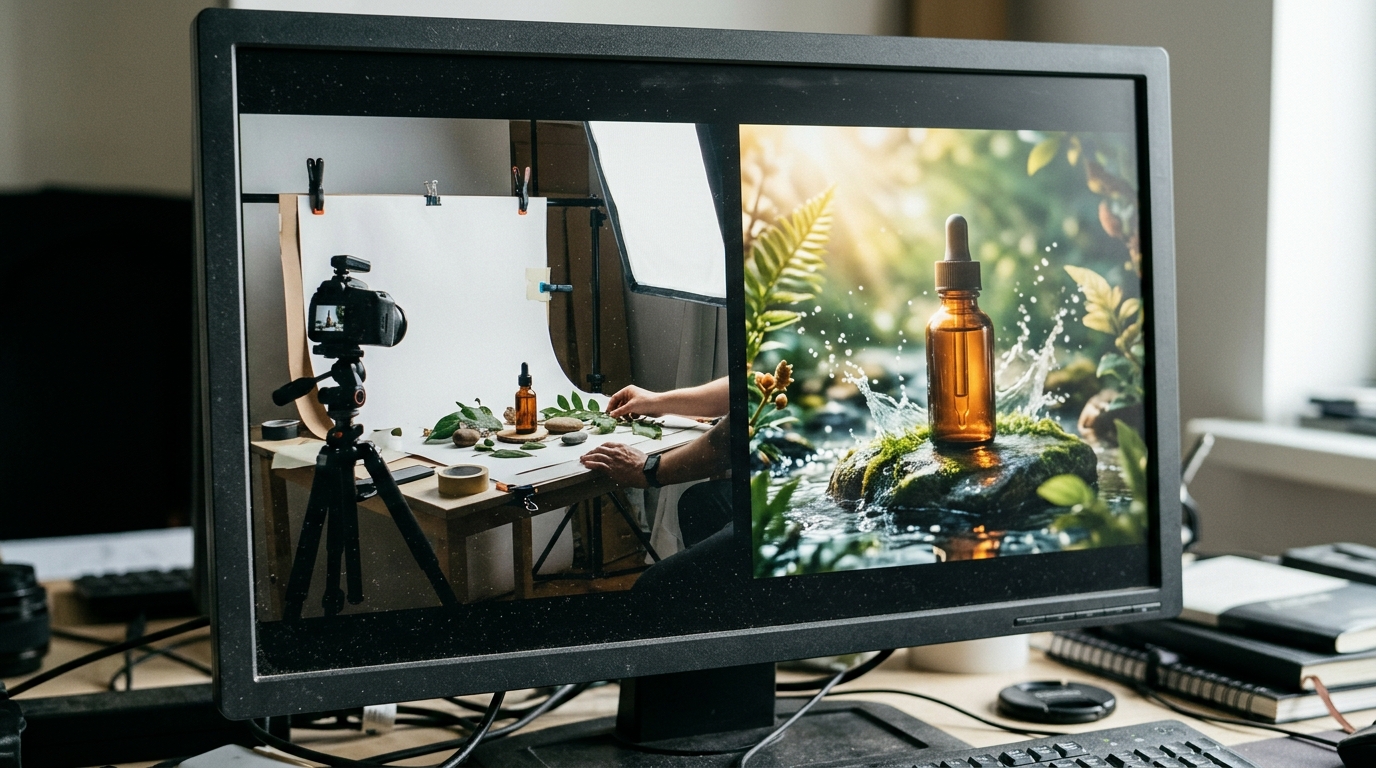
Transitioning from traditional to AI-generated advertising photography brings significant advantages. Traditional shoots require on-site crews, physical locations, and days—sometimes weeks—of coordination. AI-generated content reduces production time from weeks to days or even hours. Generative production eliminates expenses for travel, set design, and talent, freeing budgets for creative iterations. Flexibility is a key differentiator: AI-generated visuals allow instant revisions and global-scale adaptations without reshoots. You can direct style, lighting, or location changes in real time, with no logistical delays.
Infographic: Key differences at a glance
| Criterion | Traditional Photography | AI-Generated Content | Scalability |
|---|---|---|---|
| Production Time | 2–6 weeks | 24–72 hours | Instant global rollouts |
| Typical Cost Range | $5,000–$60,000 | $800–$6,000 | Bulk iterations at low cost |
| Revision Process | Reshoot required | One-click edits | Unlimited |
| Location Flexibility | Physical, limited | Any, unlimited | Virtual, customizable |
| Crew & Logistics | 5–30+ people | 1–3 specialists | Remote collaboration |
The Process: From Brief to Final AI-Generated Visuals
To make the most of AI in advertising photography, brands and agencies follow a streamlined process:
- Creative Brief & Requirements: Clarify campaign goals, target audience, deliverable formats, and brand guidelines. Specify must-have elements, product angles, and emotional tone.
- Tool Selection & Storyboard: Choose AI tools aligned with creative intent—Midjourney, Stable Diffusion, or proprietary platforms. Develop a visual storyboard covering key scenes, layouts, and product placements.
- Prompting & Image Generation: Craft precise prompts for each visual. Generate multiple options per shot, focusing on product accuracy, context, and brand consistency.
- Review & Refinement: Shortlist top visuals. Apply up to two feedback rounds for edits—adjust lighting, colors, or composition as needed. Ensure all outputs meet campaign objectives.
- Final Delivery: Export approved visuals in all required formats (e.g., high-res stills, 9:16, 1:1, 16:9). Transfer full commercial rights upon project completion.
Checklist: What brands need to prepare
- Concise creative brief
- Moodboards and references
- Product images/assets
- Format requirements
- Brand style guide
- Feedback contacts and timelines
Legal Aspects: Commercial Rights, White-Label Production, and Brand Safety
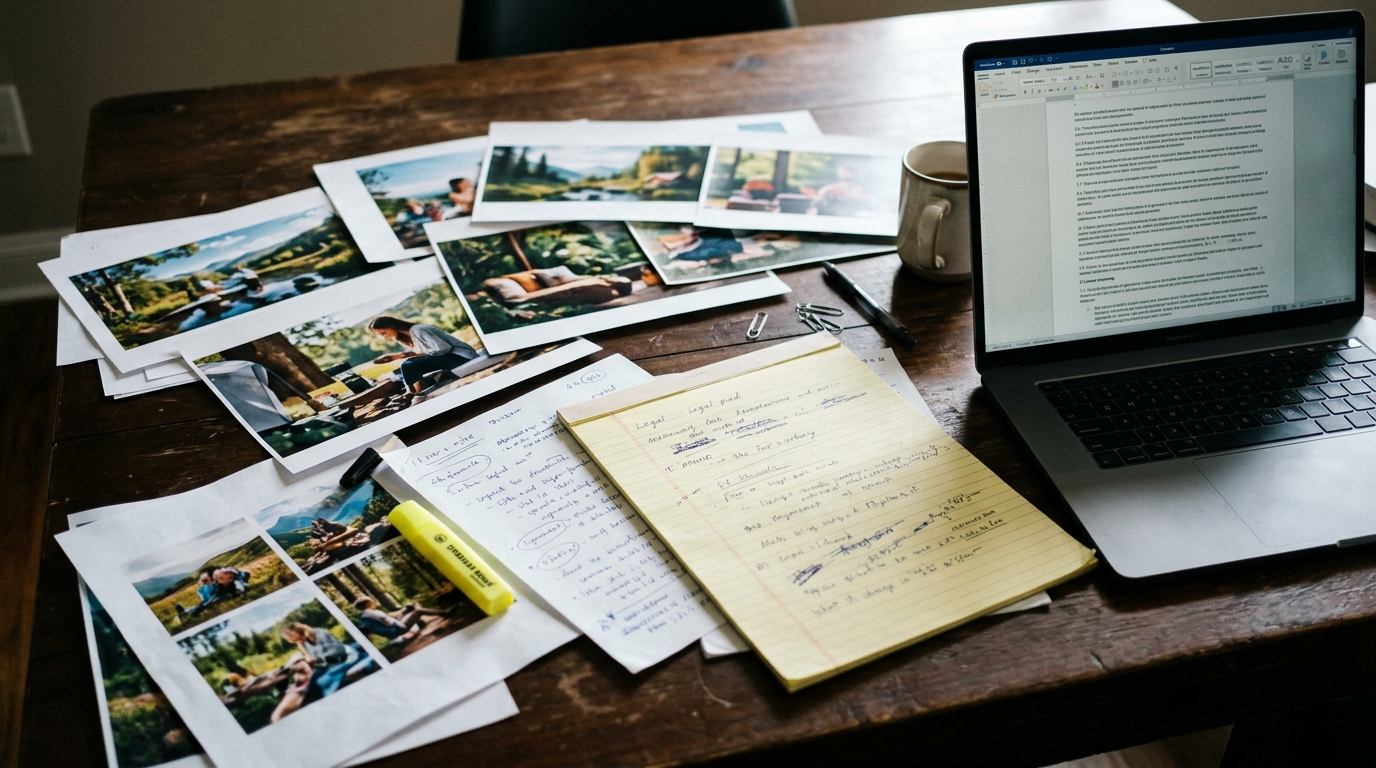
As AI-generated content becomes standard in advertising photography, clear commercial rights are essential. Ensure your provider transfers full commercial license upon delivery; Animagine Solutions includes this in every project after payment. For agencies, white-label production offers flexibility—delivering campaign assets branded for your end client, with all usage rights documented and transfer-ready.
Strict adherence to copyright, model likeness, and third-party IP is essential in AI workflows. Request a compliance checklist and indemnification from your vendor. To maintain brand safety and protect brand visual identity, demand transparent documentation of content sources, prompt removal of any flagged elements, and ensure generative models are trained only on ethically sourced data.
Challenges and Limitations of AI in Advertising Photography
Despite its advantages, AI-generated visuals can face the realism vs. uncanny valley dilemma—subtle flaws in lighting, anatomy, or context may undermine authenticity. Manual oversight is needed at each stage, especially for facial expressions and hand details. Ethical challenges are also present: AI models can reflect biases from training data, leading to stereotype reinforcement or lack of diversity in advertising photography. Aligning AI outputs with strict brand guidelines often requires iterative prompting and selective post-processing, as current models rarely match brand assets perfectly on the first try. Human creative direction remains vital to maintain trust, ethics, and brand consistency.
Practical Tips: Integrating AI Photography into Your Campaigns
To successfully integrate AI product photography, brief your agency or provider with clear campaign objectives, audience profiles, and brand assets. Include product references, desired emotional tone, and any mandatory visual cues. Clarify deliverable formats—such as 9:16 video, 1:1 social, or high-resolution stills—to streamline campaign planning.
Demand for AI product photography is accelerating: industry analysts forecast a two- to threefold increase in agency RFPs for AI-generated visuals from 2025 to 2026. Brands that adopt early can reduce production timelines by 40–60% and increase creative output without scaling physical resources.
Checklist: Ordering AI product photography
- Define campaign objectives and key messages
- Specify target audience and usage platforms
- Provide product images, references, and branding assets
- List mandatory visual elements and avoidances
- Clarify emotional tone and style preferences
- Set technical requirements (formats, resolutions, aspect ratios)
- Confirm commercial rights and rounds of revisions
- Align on timelines, delivery milestones, and feedback loops
Часті запитання
How does AI improve personalization in advertising photography?
AI enables brands to create highly personalized advertising visuals by generating thousands of unique images tailored to specific audience segments. This real-time adaptation increases engagement and relevance, allowing campaigns to resonate more deeply with diverse demographics and preferences.
What are the main benefits of using AI-generated models in advertising campaigns?
AI-generated models offer brands flexibility, inclusivity, and cost-effectiveness. They allow for rapid creation of diverse, photorealistic personas that match target audiences, eliminate casting constraints, and enable instant changes in appearance or style—all while maintaining consistent visual quality.
Can AI-generated advertising photography be used for global campaigns?
Yes, AI-generated advertising photography is ideal for global campaigns. Brands can instantly create visuals set in any location or cultural context, ensuring relevance across markets without the need for physical travel or set construction, which streamlines production and reduces costs.
How do brands ensure brand consistency with AI-generated visuals?
Brands maintain consistency by training AI tools on their specific visual guidelines and brand assets. These tools then apply consistent color schemes, logos, and styles across all generated images, ensuring every asset aligns with the brand’s identity, regardless of scale or platform. Детальніше про це — у матеріалі product photographer.
What legal considerations should brands keep in mind with AI-generated advertising photography?
Brands must secure full commercial rights for all AI-generated visuals used in advertising. It’s essential to ensure providers transfer these rights upon delivery and that all content complies with copyright, privacy, and brand safety standards to avoid legal complications.
Головне за хвилину
- Embrace AI-driven tools to generate campaign visuals quickly, cost-effectively, and at scale—eliminating the need for traditional sets, models, or locations.
- Leverage personalization by producing unique, photorealistic images tailored to specific audience segments, enhancing engagement and brand relevance.
- Maintain brand consistency as AI platforms can learn and apply visual guidelines across every asset, ensuring cohesive campaigns across all channels.
- Maximize flexibility and efficiency: Instantly revise visuals, adapt formats for different platforms, and iterate creative ideas without logistical delays or reshoots.
AI is redefining advertising photography, making it faster, more flexible, and highly personalized. If you’re ready to modernize your campaign visuals and unlock new creative possibilities, start a project today.
More from the blog
AI video editor vs traditional editing: Which saves more?
AI video editors versus traditional editing: which is more cost-effective? Explore how AI tools can streamline your video production process.
Make AI videos: 5 Proven Workflows for Agencies & Creators
Discover five proven workflows to make AI videos efficiently. Perfect for agencies and creators aiming for top-quality results with less hassle.
Product photographer or AI product photography: Which works for ecommerce?
Explore whether a product photographer or AI product photography is best for ecommerce. Compare benefits, costs, and creative options for online stores.